 micromobilitybiz Delivering news updates to the micromobility industry, focusing on e-bikes, e-scooters and green transport
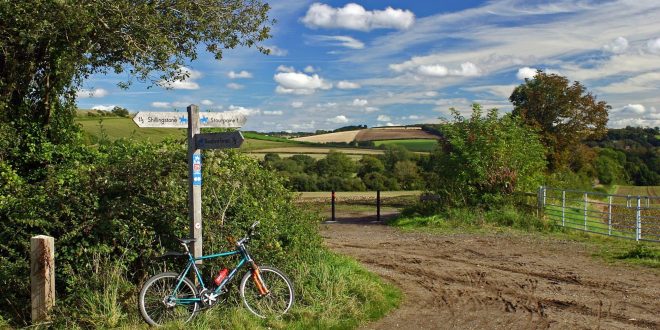
Rural communities in the UK have resorted to delivering their own traffic-free paths as funding and political will have failed to materialise – and a new toolkit hopes to empower more of them to create greenways in their areas.
Traffic-free inter-urban paths are hugely popular local resources, giving communities low-cost, sustainable transport options as well as benefiting health, rural economies and the environment. With fuel prices remaining high, and growing cost of living and health crises, there has never been a greater need for alternatives to car dependency for short trips – particularly in rural and peri-urban areas.
However, an FOI issued as part of the project revealed that, of 73 local authorities responsible for delivering greenways, land access is holding up delivery for 23 of them – totalling 117 miles of routes. Most councils simply aren’t trying to deliver any paths. Meanwhile, community groups are struggling to push for more than 200 miles of paths across the UK, across at least 50 areas, many of them held up for years, some decades.

For both councils and campaigners land access, funding, and limited resources stand in the way of delivering greenways. One local authority officer explained the difficulties even the most committed councils currently face.
They said: “To convert a typical railway path takes a great deal of effort: a resistant landowner can hold things up for years and it can be better to consider an alternative route. We can’t spend time on more than one difficult route at once. It takes all our effort to progress it an imperial inch per year.”
As a result a few communities are key in identifying creative solutions, building support and driving projects forward. In the toolkit, case studies and audio interviews bring some amazing success stories to life and help others follow in their footsteps.
Following publication of the toolkit, the UK’s most experienced community path builder, National Cycle Network founder, 80-year-old John Grimshaw, is offering to help groups understand how to design paths, by leading technical visits to some of the many greenways he has designed and continues to work on.
Key info:
-
Research reveals more than 25% of local authorities are struggling to deliver traffic-free greenways in their areas
-
117 miles of routes are being held up in landowner disputes, as councils lack the resources to deliver paths
-
At least 200 miles of community-led path projects are held up across 50 individual projects – by a lack of funding, landowner issues or red tape
-
A written document and audio interviews seeks to empower local communities to help navigate path delivery in this challenging environment

Case studies include:
The Sheppey Light Rail Greenway group on Kent’s Isle of Sheppey, cleared brambles from a disused railway path after a hoped-for traffic-free route, allegedly promised by successive council administrations for 40 years, failed to materialise. With no alternative to driving on the island, the path enjoys strong community support. A new council officer helped revitalise the project, while bramble clearing volunteer events built momentum and support. Construction support and funding came from local businesses and the government, with the backing of local landowners.
In Curry Rivel, in Somerset, village residents planned and built a short 200m path alongside a busy main road. Wanting a safe active route to the nearest town of Langport, they won climate emergency funding from Somerset Council, topped up by a local landowner. Having secured some free stone from nearby flood defence work as a path base, and after successful negotiations with a landowner, they are on the way to extending the route, beside a field, towards the nearest town.
In rural Dumfries and Galloway, in Scotland, the Kier Penpont and Tynron Development Trust (KPTDT) identified a 4km traffic-free path linking villages as the top local priority for residents. The resourceful group raised money from a pot pourri of sources, including local wind farm and renewable energy funds, regional and local authority and levelling up funding, the Walk, Wheel Cycle Trust, and more. The path is almost complete, and users include commuters, mobility scooter users, healthy ageing groups and more.
The written section of the report is broken down into steps, from an initial idea to path building, taking users through working with landowners and councils, understanding relevant policies, identifying potential funding and managing volunteers. The toolkit has the support of a range of stakeholders, including the charity behind the National Cycle Network and the Canal and River Trust.

Toolkit author, Laura Laker, says: “Working on this project for the past year has been one of the great privileges of my career so far. In both the book, and in this toolkit, I have been constantly inspired by the efforts of small groups of people, sometimes over decades, absolutely committed to achieve something positive for their communities – not least for children.”
“However, the case studies in the toolkit underline how ludicrously hard it is to build traffic-free routes in this country. While our road and rail networks are delivered by national bodies on multi-year funding cycles, retired engineers, veterinarians and civil servants are left to cobble together the land access, funding and political will needed to deliver walking, wheeling and cycling routes. This leaves communities effectively stranded on transport islands, which it is only possible to enter or leave by car. With fuel price shocks driving up the cost of motoring, this situation is far from sustainable.”
“Seemingly everything, from the planning process to a lack of funding for rural active transport, is stacked against communities wanting a greenway – but they refuse to give up. I hope the words of those who have succeeded can inspire, inform and initiate more of these routes nationally – and bring delivery time down to years, not decades. I also hope they shine a light on the benefits of these paths to local communities. Some of those words are incredibly moving, such as from groups in Somerset and rural Scotland where local mobility scooter users can finally access nature unaided for the first time – or children can cycle to school.”
With government funding largely focused on urban areas, rural communities can feel left behind. These traffic-free paths are arguably most valuable where people have the fewest transport choices, however – boosting local economies, health and accessible routes into nature. Funding for rural paths exists, it just takes a bit more creativity in accessing.
One campaigner said: “I try to explain what I do to family in Germany and they just don’t understand the idea of volunteers delivering cycling infrastructure – to them it’s like volunteers doing police work, or running the railways”.
One element that cannot be replicated on a page is the expertise gained from half a century of constructing paths. John Grimshaw and Caroline Levett helped found the National Cycle Network 40 years ago this year, and are still delivering paths with local communities today, as the charitable organisation Greenways & Cycleroutes.
John and Caroline both featured in Laura’s book, and groups contact them on an almost fortnightly basis asking for their help. John, now aged 80, is offering path campaigners the chance to join him on technical site visits to talk through design elements, features like drainage and gradients, and to be inspired and empowered. This work is still ongoing with community groups today, and while construction isn’t happening all the time, there are also paths that have already been completed, which people can visit.
The expertise shared in this toolkit is available thanks to community groups and charitable organisations, local and national government employees and many more.
This work was funded by a grant from the Foundation for Integrated Transport.