 micromobilitybiz Delivering news updates to the micromobility industry, focusing on e-bikes, e-scooters and green transport
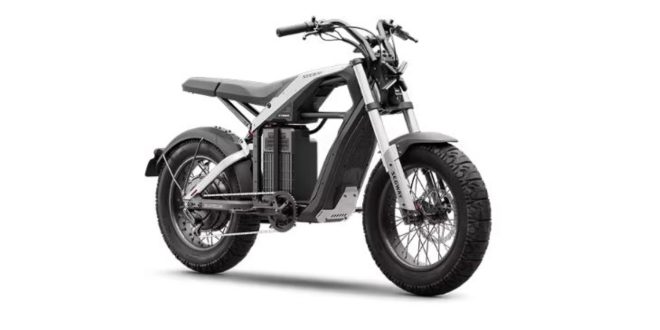
LEVA-EU, the body which positions itself as “the only trade association in Europe to work exclusively for light, electric vehicles (LEVs)” has taken to social media to promote a product which conforms to no current classification for legal use, with the manufacturer itself stating “for off-road use only”.
Reading this, you would be forgiven for jumping to the conclusion that the product in question is a Sur-Ron (Surron). And that line of thinking would be entirely reasonable, given the reputation. However, you’d be incorrect. The product in question is in fact a Segway – the Xyber – with a top speed of 56kph.
To compound matters further, the post describes the Xyber as a “rugged e-bike that blurs the line between a bicycle and motorbike.”
Adding to this, the post clearly promotes the Xyber “Boasting a top speed of approximately 56 km per hour…..is designed to serve both as a potential car alternative for commuters and as an adventurous off-road vehicle.” This despite the Segway website clearly stating the product is “for off-road use only. Riders must follow all local, state and federal regulations”.
That Segway chooses to position the pedals so that they are obscured from view in its own promotional images suggests it doesn’t really want customers to see the product as something which requires pedalling. It is not hard to figure out why: Search Segway Xyber on YouTube to see for yourself.
What is an eBike? What’s in a name?
‘E-bike‘ as a naming convention has been widely misused, with mainstream media failing to distinguish between EAPC, Speed Pedelec, eMopeds and eMotorcycles – all to the significant detriment of legal and compliant products, and the wider cycling industry.
Thankfully, in the UK, it appears we have turned a corner, with government recently highlighting ‘illegal’ and ‘fake’ e-bikes, whilst also instructing Police to undertake a nationwide campaign to impound and crush these illegal and fake e-bikes.
Taking a step back, the social media post from LEVA-EU shouldn’t come entirely as a surprise move. This is the same organisation which previously lobbied in favour of increasing the power of e-bikes (eapc) from 250W to 500W.
Why has LEVA-EU taken this stance?
Light Electric Vehicles (LEV) already dominate the EV landscape in Southeast Asia, and are increasingly popular in China. eMobility and micromobility are massive sectors. Two-wheeled EVs have a significant role to play in reducing private-vehicle-based transport emissions.
Looking beyond the cycling industry, the shift to EVs – on four wheels and two wheels – is well underway.
Globally, auto and motorcycle industry manufacturers are looking to the future. Electricity is the ‘fuel’ of choice. Critically, these manufacturers work within regulatory frameworks, ensuring the safety of owners, users, and the wider general public.
This last point – regulatory framework – is central to the evolution of Electric Vehicles (EV), and a real point of distinction, with some businesses exploiting loopholes, or flat out ignoring compliance requirements.
Taking us back to our Surron mention, right at the start of this feature – it is possible, in the UK, to legally register and ride a Surron on the road. To do so, it acknowledges the Surron as an eMotorcycle, and, as a motorcycle, it requires DVLA registration, to pass an MOT, and to be insured.
This hits at the core of the misguided and irresponsible position taken by LEVA-EU in promoting the Segway Xyber. It conforms to no current classification. Fitting pedals to it does not make it possible to confuse it with a bicycle or e-bike. Removing the pedals and selling it to be registered as an eMoped makes sense. But that requires it to meet DMV (USA) or DVSA (UK) standards.
Change. Discomfort. (R)evolution
Lobbying for change, for new forms of accessible mobility, is an absolute essential. Influencing policy and working with governments is integral to this work. Promoting products which are not compliant and meet no regulatory compliance isn’t the way to go. Global auto and motorcycle brands with two-wheeled EVs long waiting in the wings likely don’t appreciate it. Governments definitely don’t appreciate it. The cycling industry is tired of it.
The traditional cycling industry has fought a media barrage based on the misuse of ‘e-bike’, with significant reputational and sales performance damage resulting from it. LEVA-EU knows this, and seems – with this Segway promoting post – to choose to ignore it. Not what anyone would expect from a respected and respectable lobby group.
Right to reply
At the time of publishing, MicromobilityBiz (MMB) reached out to LEVA-EU for comment. After detailed email correspondence, the following ‘right to reply’ has been shared by LEVA-EU.
NB: Amongst the reply, you will also find – highlighted in bold italics – MMB clarifications and links to reference sources provided by MMB in support of the original article
Dear Editor,
We exercise our right to reply to the above article, which contains serious factual errors, misleading insinuations, and misrepresentations of both EU/UK and U.S. regulatory frameworks.
First, the claim that the product “conforms to no current classification for legal use” is incorrect. In the EU, vehicles may be type-approved under Regulation (EU) No 168/2013 or excluded under Article 2(2) and governed by the Machinery Directive. Depending on specification, the Segway model in question could lawfully be classified as an L1e, L3e, or excluded under Article 2(2) point (h) or (g). The article cites no contact with Ninebot-Segway and fails to establish the intended market or conformity route.
L1e, L3e – Categories of vehicle under European L – category vehicle regulations. eMoped limited to 45 kph, and eMotorcycles from 11 Kw to more than 35 Kw in power (where 1Kw = 1000w)
In the UK a CBT test, licence and insurance, tax, along with registration with the DVLA is required to ride either vehicle. Registration plates are required to be fitted.
L3e-A1, A2, A3 Electric Scooter classification is allowed power up to 11kW and is equivalent to a 125cc engine
https://www.lexhaminsurance.co.uk/blog/uk-law-and-electric-motorbikes-what-you-need-to-know/
The vehicle in question in this article has:
– A 3000W (single battery) or 6000W (dual battery) peak power rating and a torque output of 175Nm
– Been designed so that it can be ridden without pedal input (motor engages without pedalling) using only throttle control
– Has a top speed of 35 mph / 56 kph
– Comes without turn signals
Second, the article confuses jurisdictions. The model shown is for the U.S. market, yet it is assessed against EU/UK rules. Compliance must be evaluated according to the market of sale.
The manufacturer openly states on their website that “*Product recommended for riders 18 years and older, for off-road use only. Riders must follow all local, state and federal regulations.”
In addition to this, the vehicle has no turn signals fitted as standard, which is a legal requirement for on-road use in the United States of America
Further, LEVA-EU makes no distinction for region in its social media post, or email newsletter, when discussing the vehicle in question.
Third, several insinuations are unfounded. There is nothing unlawful about pedals, and marketing images do not determine classification. The term “e-bike” is not a legal definition in EU law, so alleging its “misuse” is meaningless without evidence. To describe the product as an “illegal” or “fake” e-bike is defamatory without proof of non-compliance.
The UK government has taken this position, and made it clear, when addressing the challenge of illegal and fake ebikes – a link we shared in the original article
https://appgcw.org/resources/inquiries/unregulated-and-unsafe-the-threat-of-illegal-e-bikes/
This challenge is not unique to the UK.
In the Netherlands, illegal Fat Bikes have caused similar problems.
Australia has also struggled with non-compliant vehicles being mis-sold and misused.
Fourth, the article misrepresents LEVA-EU’s policy position. We do not lobby for an increase from 250W to 500W. Our published position is that arbitrary power caps on speed-limited vehicles are nonsensical; safety should be assessed through kinetic energy and acceleration, not nominal motor ratings.
In additional correspondence, following the publishing of the Right to Reply, LEVA-EU outlines that “this related to the consultation of the UK Government, in which it was specifically proposed to raise the maximum continuous rated power from 250 W to 500 W and to allow throttles on electric pedal-assisted bikes without the vehicles having to be type-approved. In that context, LEVA-EU indeed called on stakeholders to support both proposals. This would have opened up the UK e-bike market to a much wider audience, including people with physical limitations.”
Finally, we are highly offended by the suggestion that “LEVA-EU knows this, and seems – with this Segway promoting post – to choose to ignore it. Not what anyone would expect from a respected and respectable lobby group.” Our core mission is to help LEV companies understand legislation so they can apply it correctly. To be told off in such a condescending way by an author who is ill-informed, does not check facts, and is clearly biased, is utterly unacceptable. We therefore request: 1. Prominent publication of this reply alongside the original article; 2. Correction of the factual errors identified; and 3. Retraction of insinuations implying illegality or misrepresenting LEVA-EU’s work.
Reviews of the vehicle by other UK and US-based media outlets
“The only hint that the Xyber is an e-bike rather than a full-on motorcycle are the pedals and chain…”
“…as the Xyber is so powerful it’s not allowed on public roads – even in the US, where e-bike restrictions are considerably more lenient. So the Xyber can only be used off-road (officially) on dirt tracks and private land.”
https://www.popsci.com/gear/segway-xyber-electric-moto-bike-review/
“If you scroll to the very bottom of the company’s product page, you’ll see fine print that says Xyber is designed strictly for off-road use (and a road-legal version will eventually be released).”
“I also briefly tried pedaling the bike, but who are we kidding? You’re going to want to use this thing like a motorcycle. Because its top speed is 35 MPH, the Xyber is too fast to comply with U.S. motor vehicle laws…”
https://www.roadandtrack.com/gear/lifestyle/a64600403/segway-xyber-review-ebike/
NB: “The federal government requires manufacturers to equip vehicles with turn signals, which must be functional for vehicles driven on public roads.”
“If I had one major gripe with this machine, it’s the absence of turn signals. At these speeds, signaling with hand gestures can feel risky, and while I get Segway’s logic (they’re trying to keep it classified as an e-bike, not a moped)…”
https://uk.pcmag.com/health-fitness/159761/segway-xyber
“As a motorbike, it’s a tremendous vehicle.”
“There are three throttle modes: Eco, Sport, and Race. While each can achieve a top speed of 35mph, they differ in terms of acceleration. “