 micromobilitybiz Delivering news updates to the micromobility industry, focusing on e-bikes, e-scooters and green transport

Rebecca Morley speaks to XYZ Cargo’s MJ Somerville on building functional, modular, and repairable cargo bikes
This piece first appeared in the February edition of BikeBiz magazine – get your free subscription here
“I entered this industry to continue the work of cycling for emancipation and freedom versus sport and profit” – said XYZ Cargo’s MJ Somerville, who I recently sat down with to talk about the cargo bikes and how they came to be involved. And I can honestly say I was nothing short of inspired during our conversation.
XYZ Cargo was started in Copenhagen in 2011 by Urban Realm Art Collective N55, in collaboration with Till Wolfer, who decided to use bikes as a way of addressing aesthetic, ethical, social and environmental issues. They also wanted to work in a very direct way with public space and urban planning, Somerville told BikeBiz.
“One of the major aims of XYZ Cargo is to develop an alternative small business model based on principles of fair and local production,” they said, “meaning that we try to produce as much as possible in a socially sustainable way.”
XYZ Cargo UK is also a Bicycle Association member and all the models it builds in the UK are CE rated and conform to EN15194:2017 for electric systems, using components only from reputable manufacturers.
Microfactories
Somerville is the UK sub-producer who came on board in January 2022. Their background has been primarily in the third sector cycling industry and reuse: “I have seen so many bike shaped objects go into a skip because they were really never fit for purpose in the first instance. It is frustrating when you are trying to get affordable transport to those who need it.
“I entered this industry to continue the work of cycling for emancipation and freedom versus sport and profit.”
XYZ Cargo is licensed under Creative Commons BY-NC-SA 4.0 – this means that anyone can share or adapt the designs to meet their needs, but they must be attributed to N55 in collaboration with Wolfer. They also cannot be used for financial gain and that any designs also must sit under Creative Commons licensing.
XYZ Cargo is also fully repairable and circular without the need for expensive specialised tools, and is fully modular so it can be adapted to different people’s needs and uses.
Somerville said: “We work as a collective of microfactories to work towards a fair, sustainable and production supporting local distributors and suppliers as much as possible. At the moment there are four producers: Denmark, Germany, Spain, and the UK.
“I hand make everything from high-quality, long-lasting materials that as much as we can, be reused or recycled. The frame can be built and rebuilt and adapted as needs change or be recycled as raw materials. I am learning to sew and currently produce all the covers myself.”
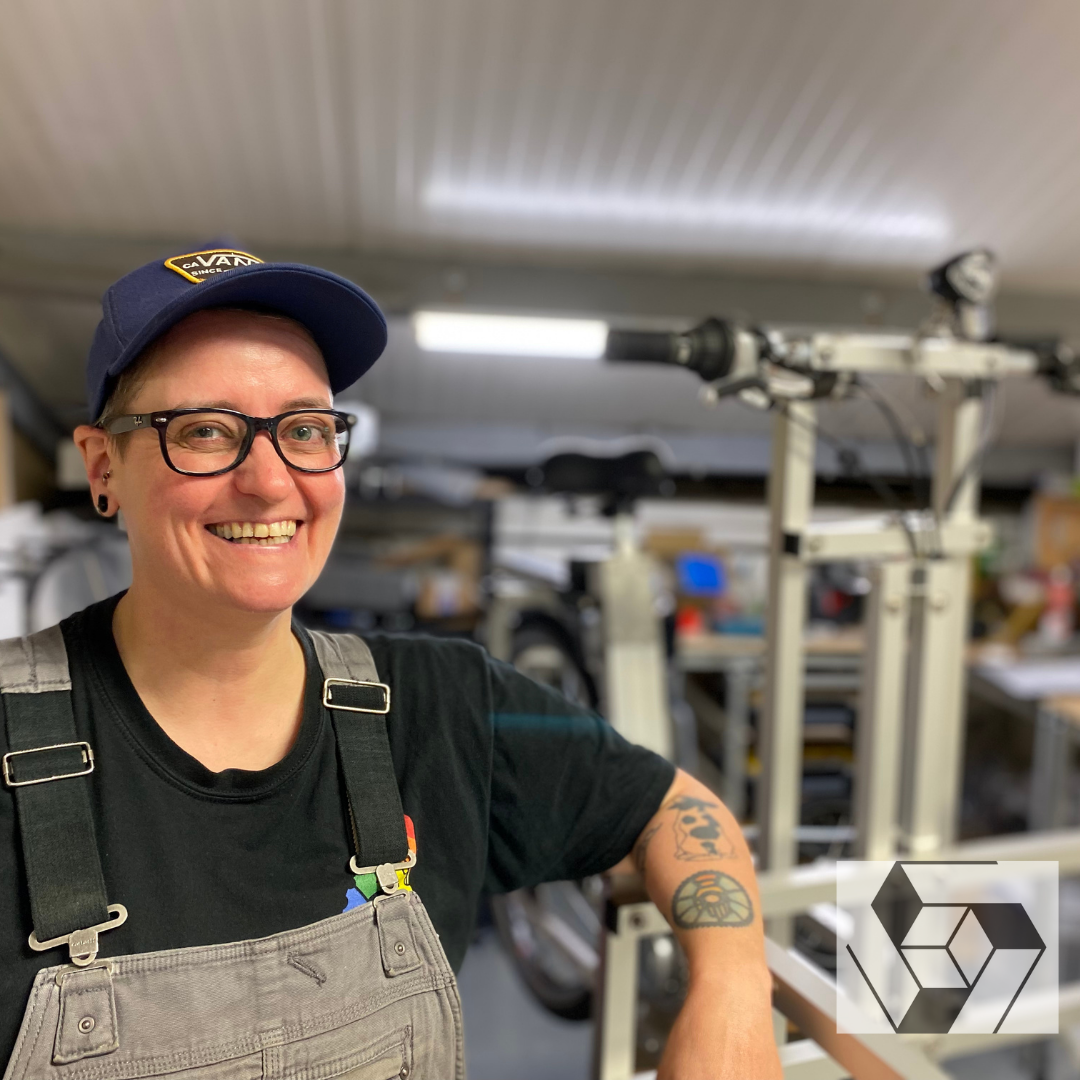
XYZ Cargo is based in a shared makers space at the Edinburgh Open Workshop, Somerville continued. They said: “This means that not only can small producers thrive, because we have lower overheads, but it also gives me access to everything from drill presses and chop saws to laser cutters, industrial sewing machines and cnc machines. Name it, we have it.
“I think this will be the way that small batch manufacturing can thrive as there are so many creative minds around but also the ability for rapid prototyping, machine availability without major investment.
“The client is a collaborator. They are able to input the design and can come build their cycle alongside us or we can come to them.”
Somerville described XYZ Cargo as an outlier in the industry, as it does not function in the standard model regarding manufacturing, distribution or design. Clients tend to be in the third sector, local authorities and community groups, they added.

Market trends
On trends seen in the market, Somerville described a process of upheaval and immense change in the industry, initially driven by poor decisions made during the pandemic but also a shift from a leisure market to a mobility market. “This process will hurt but I also think that things need to change to professionalise the industry.
“Like all new things we see many players come to the market with big money behind them but are unable to deliver. Cargo cycles will drive that, but there are some personal frustrations that they have taken a machine which before electric motor technology was marginalised and then making them very expensive and unattainable for those who need it.”
So what does Somerville hope to see looking ahead? “What I expect to see and what I want to see are probably at odds with each other,” they said.
“I would like to see more diversity in the industry at all levels, pay to be displayed in advertising, pay to be raised as we are a group of very talented and skilled people who are barely making minimum wage in some instances. Diversity will bring new ideas and products but will also expand the consumer base as they will see themselves represented. I expect to see some brands come out on top and some to fold.”
XYZ Cargo is also currently collaborating with Scottish brand FreeFlow Technologies to integrate a mid-motor into its trikes and bikes. “I will start producing our two-wheeled bike and four-wheeled truck model and continue working with our clients and collaborators to make cycles that work for them.
“The beauty of an open source product is the ability to encourage the next generation of designers.”
XYZ Cargo is working in collaboration with Napier University Product Design department and the Scottish Centre for Cycling Innovation, where honours students have the ability to have hands-on experience designing and prototyping anything, from box design to suspension to motor capabilities or create a completely different model.
“The goal is always to stay small and live within the mindset of financial nihilism,” said Somerville.
“Financial nihilism is a mindset that rejects the traditional significance and value placed on financial success and wealth accumulation. I want to be able to be creative and build people transport without the end goal being excessive wealth and profit.”

