 micromobilitybiz Delivering news updates to the micromobility industry, focusing on e-bikes, e-scooters and green transport
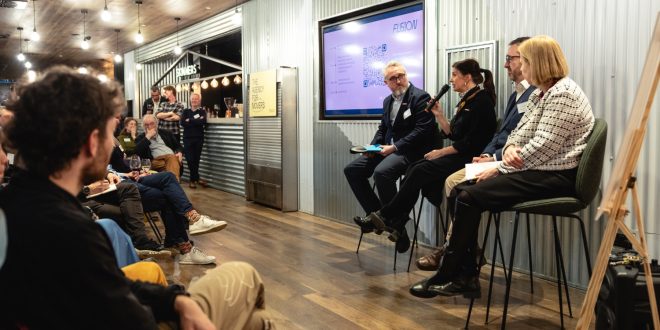
Fusion Media recently hosted “The Future of Active Travel” – a live event which brought together some of the most influential voices in UK transport.
The panel discussion, chaired by Fusion’s CEO, Adam Tranter, saw Chris Boardman CBE (National Active Travel Commissioner, Active Travel England), Ruth Cadbury MP (Chair, Transport Select Committee) and Trudy Harrison (Former Minister & Senior Advisor, Fusion), discuss policy, infrastructure, public engagement, and messaging strategies for promoting active travel.

Key talking points
Reframing riding a bike: Normal people doing normal things
One of the key themes was the need to change how cycling – riding a bike – is presented.
This is something Fusion, as an agency, has been working on with clients and with its own #BikeIsBest campaign.
Here, Chris Boardman stressed that cycling should not be seen as an extreme activity requiring high-visibility clothing and helmets. Instead, it should be portrayed as an everyday mode of transport, no different from walking.
Boardman then highlighted a simple but powerful image: Two teenage girls in the Netherlands cycling side by side in ordinary clothes, smiling and chatting.
This is the vision we – the cycling industry – should be working towards: Cycling as a normal, everyday activity, free from unnecessary barriers.
A recurring theme was the need to shift how we talk about active travel.
Boardman pointed out that talking about children’s independence, cleaner air, and safer streets resonates across political divides (where, in stark contrast, focusing on “taking away parking” or “restricting cars” alienates many people).
Another key point Boardman raised: The importance of emotion over data in messaging. While statistics are useful, cultural change happens when people connect personally with an issue.

Seizing opportunities in policy and funding
The discussion highlighted the importance of timing and political momentum in securing funding and policy commitments for active travel.
The current Labour government missions in Health, Safer Streets and Devolution are seen as prime opportunities for change.
Trudy Harrison reflected on her time in government, noting how external factors, such as COP26 and the push for net zero, created a political climate where bold policies like Gear Change could be implemented.
Advocates must be ready to act when opportunities arise.
Making everyday changes that add up
The panel discussion further reinforced that big transport projects grab headlines, but small, everyday improvements make the most difference to people’s lives.
Whether it’s creating safer crossings, improving pavement conditions, or tackling pavement parking, these are the kinds of interventions that improve accessibility and encourage active travel.
Ruth Cadbury raised concerns that active travel risks being side-lined amid competing transport priorities such as rail reform and bus franchising.
Cadbury noted that, despite cross-party support for active travel, it is often not seen as a major issue in Parliament. This highlights the need for sustained advocacy in Parliament to ensure walking and cycling remain a priority.

Make it a holiday
Attendees found out that Trudy Harrison’s motto is “Make every day a holiday”: Think holidays, think experiences and the environments on holiday – life at a more relaxing pace includes transport choices. If there’s an option, this is often when those who might not otherwise may well choose cycling or walking.
The question: How can we embed that feeling into our everyday lives?
Adam Tranter makes the following observation and comparison:
People visiting Center Parcs and similar resorts experience what is, effectively, a low-traffic neighbourhood.
If these environments are so desirable for a holiday, why not create them where people live?
Opposition to low-traffic neighbourhoods often fades once people experience the benefits: safer streets, cleaner air, and stronger communities.
Real-world examples show that once these changes are in place, they become popular. We need bold leaders and it’s our job as the cycling industry – to support those who see the future.
Culture wars
Boardman points out that a section of the mainstream media, including news outlets, are actively opposed to change – framing active travel initiatives as an attack on motorists.
In reality, more people using other modes of transport frees up our roads for people who really need to drive.
Here MMB points to the excellent YouTube video ‘The best country in the world for drivers’ by Jason Slaughter of Not Just Bikes fame.
Picking up on points raised on the evening of the event, MMB also notes opportunities to re-focus messaging around the positive impact of 20mph limits, helping build confidence that choosing the bike is a viable, attractive, option.
This change in narrative leads seamlessly into promoting parents and children making their journey to school.
Local and national relationship building – with organisations such as School Streets – makes this a personal, lived, experience which parents and children share and gain first hand.
Community and school connected bike bus initiatives also serve to make habits sticky and events feel more than just a journey to school.
Enabling more children to walk and cycle helps to instil lifelong habits and benefits the wider community – a critical element in tackling the impact of inactivity for both children and adults.

The importance of health
Clearly, health is central to the case for active travel. Beyond reducing NHS costs, cycling and walking have a transformative impact on how young people engage with school and their communities.
On the night Chris Boardman pointed out that if Active Travel England achieves its target of increasing active travel by 50%, the impact could include 5.5 million more people being active, 1.8 million fewer GP visits, and four million fewer sick days.
Four key areas for change
Trudy Harrison outlined four essential areas that need focus – four “C”s:
- Curriculum – Every child should have the opportunity to learn to ride a bike as part of their education. It’s something we’re working on with our partners at The Bikeability Trust.
- Capability – The right infrastructure must be in place to make cycling a viable transport option.
- Confidence – Cycling groups and industry support to help build confidence and encourage participation.
- Communication – The benefits of cycling should be clearly and relatably conveyed to the public.
The e-bike and mainstream media
A major challenge is the misuse of the term ‘e-bike.’ Electric motorcycles and illegally modified e-bikes are often wrongly categorised using a ‘catch-all’ e-bike label, leading to confusion and negative perceptions of the industry as a whole.
At the same time, many of those riding these illegal bikes are among the most exploited workers in society, often forced into unsafe conditions due to financial pressures as they work to deliver the food we ordered.
Ruth Cadbury highlighted that any policy solution must address both safety concerns and the wider issues linked to the gig economy.

How Industry Leaders Can Support Active Travel
Engage with parents
Trudy Harrison made a strong case for focusing on parents and carers, If cycling is made more accessible for children, parents will be more likely to follow. The industry should focus on engaging with parents and carers and creating family-friendly cycling environments.
Focus on outcomes
Chris Boardman stressed the importance of connecting people with the benefits of active travel rather than just promoting cycling itself. Instead of discussing bike lanes, the conversation should be about safer streets, cleaner air, and greater independence for children.
Engage in public affairs
Ruth Cadbury pointed out that too few SMEs, charities and local campaign groups engage with the government and Parliament. Large corporations have dedicated lobbying teams, but the cycling industry and active travel advocates need to ensure their voices are heard.
Final Thoughts
The Future of Active Travel event made one thing clear: Communicating solutions known to work is critical.
Focusing on making riding a bicycle a normal part of everyday life, improving infrastructure, and appealing to people’s emotions, can make active travel more appealing and accessible.
Advocates, businesses, and policymakers must push harder than ever to make active travel a core part of transport policy.